Yes, eLearning development services can integrate with Learning Management Systems (LMS), and this integration is one of the most important parts of creating a successful online learning environment. An LMS provides the platform where courses are hosted, assigned, tracked, and managed, while eLearning content provides the actual lessons, activities, assessments, and learning experiences.
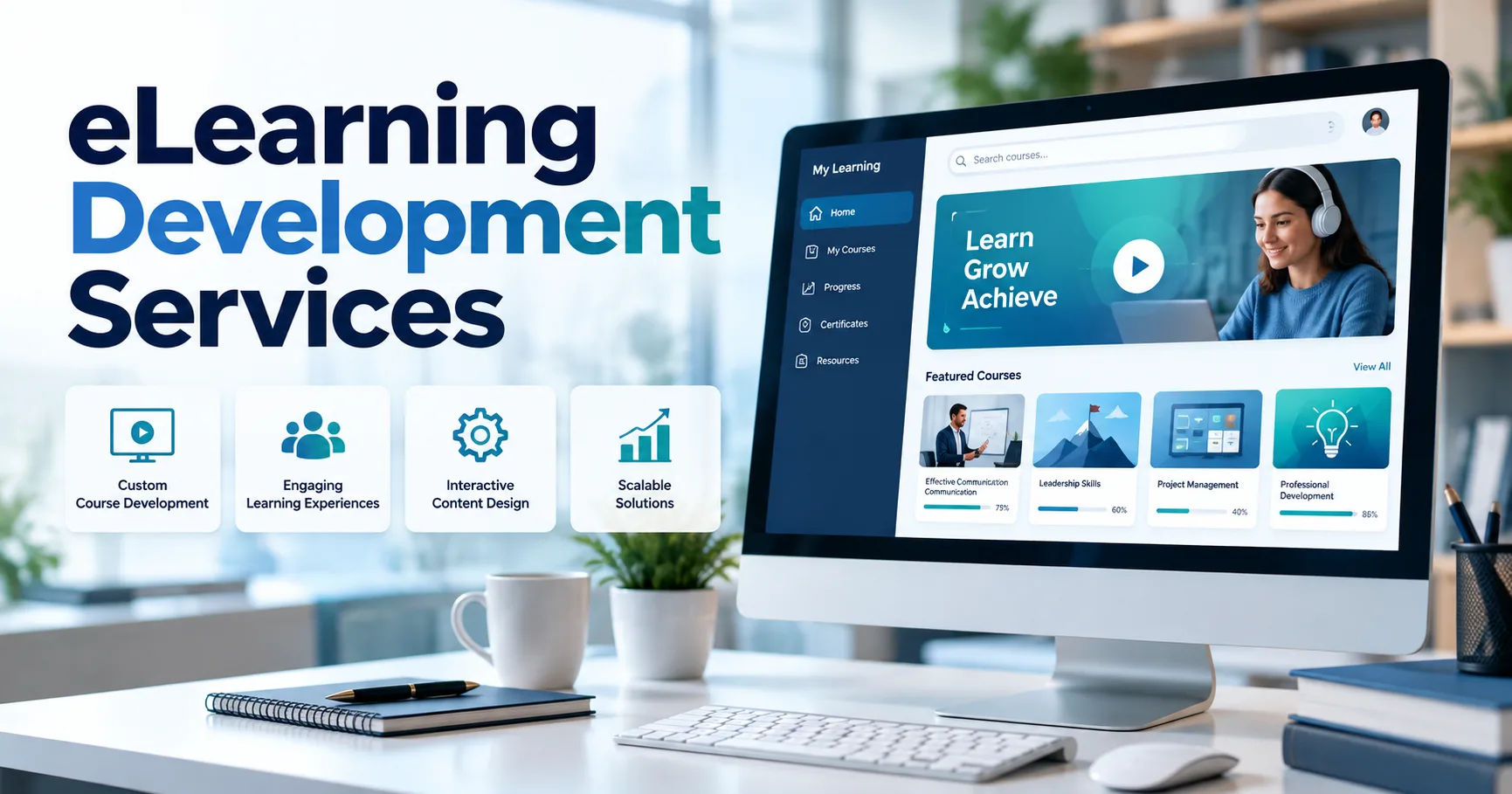
When these two components work together properly, organizations can deliver training more efficiently and monitor learner progress in one place. However, successful integration depends on factors such as content standards, LMS compatibility, tracking requirements, security, and the type of learning experience being created.
Understanding how the integration works can help schools, universities, businesses, and training organizations choose the right approach for their online learning programs.
What Is an LMS?
A Learning Management System, commonly known as an LMS, is software used to manage online education and training.
An LMS allows administrators and instructors to upload learning materials, organize courses, enroll learners, assign training, conduct assessments, and monitor progress.
For example, a company might use an LMS to provide new employees with an onboarding course. Employees can log in, complete video lessons, take quizzes, download resources, and receive completion certificates.
The LMS records important information about their learning activities. Depending on the platform and content, administrators may be able to see course completion, assessment results, time spent learning, and other performance information.
Popular LMS platforms include Moodle, Canvas, Blackboard, TalentLMS, Absorb LMS, and many corporate learning systems.
What Are eLearning Development Services?
eLearning development services involve creating digital learning content for education, employee training, professional development, and other learning purposes.
These services can include instructional design, course development, animation, video production, interactive exercises, quizzes, simulations, assessments, and accessibility features.
A simple online course might contain text, images, videos, and quizzes. A more advanced course could include interactive scenarios, branching activities, simulations, voice narration, animations, and knowledge checks.
The goal is not simply to move traditional training materials online. Good digital learning content is designed around how people learn in a digital environment.
How Do eLearning Courses Integrate With an LMS?
The integration generally happens by creating digital learning content in a format that the LMS can recognize and track.
One of the most common approaches involves using learning technology standards such as SCORM, xAPI, or cmi5.
The selected standard determines how the course communicates with the LMS or learning platform.
For example, a SCORM-compliant course can send information to an LMS about whether a learner has completed a course, what score they received, and whether they passed or failed an assessment.
This communication allows the LMS to act as a central location for managing the learning experience.
SCORM Integration
SCORM, which stands for Sharable Content Object Reference Model, is one of the most widely used standards for online learning content.
SCORM allows courses and LMS platforms to communicate with each other in a standardized way.
A course developed according to a compatible SCORM version can usually be uploaded to an LMS as a package.
The LMS then launches the course and receives tracking information from it.
Depending on the SCORM implementation, the LMS may record information such as completion status, assessment scores, learner progress, and time spent in the course.
xAPI Integration
xAPI, or Experience API, provides a more flexible approach to learning activity tracking.
Unlike traditional LMS tracking, xAPI can record learning experiences that happen outside the LMS.
For example, a learner might complete a simulation, attend an event, use a mobile application, or participate in an external learning activity.
These experiences can potentially be recorded through xAPI statements and stored in a Learning Record Store.
This makes xAPI useful for organizations that want to understand learning activities across multiple environments.
cmi5 Integration
cmi5 combines aspects of LMS-based learning management with xAPI technology.
It provides rules for launching and managing learning content while using xAPI for communication and tracking.
For organizations building modern learning ecosystems, cmi5 can provide a structured approach to tracking content while allowing more flexibility than traditional approaches.
What Information Can an LMS Track?
The exact information depends on the content format, LMS, and integration method.
Basic tracking may include whether a learner started or completed a course.
More advanced tracking can include assessment scores, lesson progress, completion dates, attempts, and interaction data.
For example, a compliance training course might record that an employee completed the training and achieved 90% on the final assessment.
An organization can then use the LMS reporting system to identify employees who have completed the required training and those who still need to finish it.
How eLearning Development Services Support LMS Integration
A major benefit of professional eLearning development services is that developers can create content with the target LMS in mind.
This begins during the planning stage.
Before developing the course, the team can determine which LMS will host the content, which tracking standard it supports, and which learner information needs to be recorded.
This prevents compatibility problems later.
Planning the Course Structure
The development team first identifies the course objectives and learning requirements.
The course may be divided into modules, lessons, activities, and assessments.
The structure should make sense from both a learning and technical perspective.
For example, a workplace safety course could contain an introduction, several safety modules, interactive scenarios, knowledge checks, and a final assessment.
The LMS can then organize the course and track the learner's progress.
Choosing the Right Content Format
Not every learning project requires the same technical format.
Some courses work well with SCORM packages, while others may benefit from xAPI or cmi5.
The choice depends on the organization's goals and the capabilities of its LMS.
Professional eLearning development services can help determine which format is appropriate before the course is built.
Testing Compatibility
Testing is an important part of integration.
A course may work correctly in one environment but experience problems in another.
For this reason, developers should test the course inside the actual LMS or a suitable testing environment.
They can check whether lessons launch correctly, progress is saved, assessments report scores, and completion statuses update properly.
Benefits of LMS Integration
Integrating digital learning content with an LMS provides several practical benefits.
Centralized Course Management
An LMS provides a central location for courses and learners.
Instead of distributing training materials through different systems, an organization can manage many learning resources from one platform.
Administrators can assign courses, organize users, and monitor completion from the same environment.
Better Progress Tracking
Integration makes it easier to monitor learner activity.
Managers can determine who has completed training and who may need additional support.
This is particularly valuable for mandatory training programs where organizations need reliable completion records.
Automated Reporting
An integrated course can send learning data to the LMS automatically.
This reduces the need for manual spreadsheets and individual record keeping.
Reports can help organizations understand participation, assessment performance, and completion rates.
Consistent Learning Experiences
When courses are developed specifically for LMS integration, learners can receive a more consistent experience.
Course navigation, assessments, completion requirements, and reporting can be designed around the organization's existing learning environment.
Easier Training Management
For large organizations, manually managing hundreds or thousands of learners can be difficult.
LMS integration can automate many routine tasks.
Administrators can assign courses to groups, establish deadlines, monitor progress, and generate reports without managing every learner individually.
Can Interactive eLearning Content Work With an LMS?
Yes. Interactive content can integrate with an LMS when it has been developed using a compatible format and tracking method.
Interactive content may include drag-and-drop activities, simulations, branching scenarios, clickable graphics, games, and knowledge checks.
For example, a customer service course could present a realistic conversation between an employee and a customer.
The learner selects a response, receives feedback, and continues through the scenario.
The course can potentially send relevant results back to the LMS.
However, not every interaction needs to be tracked. Tracking too much information can make reporting complicated.
Developers should determine which activities provide meaningful information about learning performance.
Mobile Learning and LMS Integration
Modern learners often access courses from smartphones and tablets.
This makes responsive design an important consideration.
eLearning development services can create courses that adapt to different screen sizes while maintaining compatibility with the LMS.
A mobile-friendly course should have readable text, accessible navigation, appropriately sized buttons, and media that works effectively on smaller screens.
Organizations should also test courses across different browsers and devices.
A course that works perfectly on a desktop computer may require adjustments for mobile users.
Security and Data Considerations
LMS integration also involves data security.
Learning systems may store personal information, assessment results, completion records, and other learner data.
Organizations should therefore consider security requirements during development.
Access controls should ensure that users only see information appropriate to their roles.
The course and LMS should also be configured according to the organization's security and privacy requirements.
For organizations operating across different regions, applicable privacy regulations may also need to be considered.
Accessibility During LMS Integration
Accessibility should be part of course development from the beginning.
Learners may have different physical, sensory, or cognitive needs.
Accessible courses can include captions for videos, alternative text for meaningful images, keyboard-friendly navigation, readable layouts, and appropriate color contrast.
An LMS may provide accessibility features, but the course itself also needs to be designed properly.
This is another area where professional eLearning development services can contribute by incorporating accessibility into the content design rather than treating it as a final adjustment.
Common Challenges With LMS Integration
Although integration offers many benefits, organizations can encounter technical challenges.
Compatibility Problems
Different LMS platforms support different standards and features.
A course created without considering the target LMS may not report information correctly.
Testing before deployment can help identify these problems.
Tracking Issues
Sometimes a course launches successfully but fails to record completion or scores correctly.
This can happen because of incorrect configuration, unsupported standards, browser behavior, or communication problems between the course and LMS.
Version Differences
Learning standards can have different versions and implementations.
An LMS may support a particular version while the course was developed for another.
Confirming compatibility before development can reduce unnecessary troubleshooting.
Poor Course Design
Technical integration alone does not guarantee an effective learning experience.
A course may communicate perfectly with the LMS but still be difficult to understand or uninteresting.
Learning objectives, instructional design, visual presentation, and assessment quality remain important.
How to Choose the Right eLearning Development Partner
Organizations considering eLearning development services should evaluate both technical and instructional capabilities.
The provider should understand the LMS that the organization uses or plans to use.
It is also useful to ask about experience with SCORM, xAPI, cmi5, responsive design, accessibility, assessment development, and LMS testing.
The provider should also understand instructional design.
A technically functional course is not enough if learners cannot easily understand the material.
Clear communication is equally important.
The development team should understand the organization's learning objectives, audience, technical environment, reporting requirements, and deadlines before starting the project.
Best Practices for Successful Integration
Successful LMS integration starts with planning.
First, identify the LMS and its supported standards.
Next, define what learner information needs to be tracked.
Then establish clear learning objectives and course requirements.
The course should be designed with both learners and administrators in mind.
Testing should take place before the course is released to the entire audience.
It is also useful to test different learner scenarios, including incomplete courses, failed assessments, repeated attempts, and course completion.
After launch, administrators should monitor reports and gather feedback from learners.
If problems appear, the course can be updated and retested.
The Future of LMS and eLearning Integration
The relationship between digital learning content and LMS platforms continues to evolve.
Organizations increasingly want learning systems that provide more detailed information about learner behavior and performance.
Technologies such as xAPI can support learning experiences that take place beyond a traditional LMS.
Artificial intelligence, simulations, adaptive learning, virtual reality, and interactive media may also become more common in digital training.
As these technologies develop, eLearning development services will increasingly need to combine instructional design with technical expertise.
The focus will not simply be on creating digital courses. It will be on building connected learning experiences that can be managed, measured, and improved over time.
Conclusion
Yes, eLearning development services can integrate effectively with an LMS, provided that the content is designed and developed according to the LMS's technical requirements.
Standards such as SCORM, xAPI, and cmi5 help digital learning content communicate with learning platforms and provide useful tracking information.
This integration allows organizations to manage courses, monitor learner progress, record assessment results, automate reporting, and maintain centralized training records.
However, successful integration requires more than uploading a course file.
Organizations should consider LMS compatibility, content standards, tracking requirements, mobile responsiveness, accessibility, security, testing, and instructional design before deployment.
The best approach is to determine the learning and technical requirements early in the project. This allows the development team to create content that fits the organization's existing learning environment rather than trying to solve compatibility problems after the course has already been completed.
Ultimately, the value of eLearning development services comes from bringing instructional quality and technical functionality together. When well-designed learning content communicates properly with an LMS, learners receive a smoother experience while administrators gain better control over training, reporting, and performance data.
For schools, businesses, universities, and training organizations, this combination can provide a practical foundation for delivering and managing digital education at scale.
About the Author