Reading Pashto children's books with children can be a meaningful way to support language development, imagination, family connection, and cultural understanding. For many families, reading in Pashto is also an opportunity to help children become comfortable with a language they hear at home or within their community.
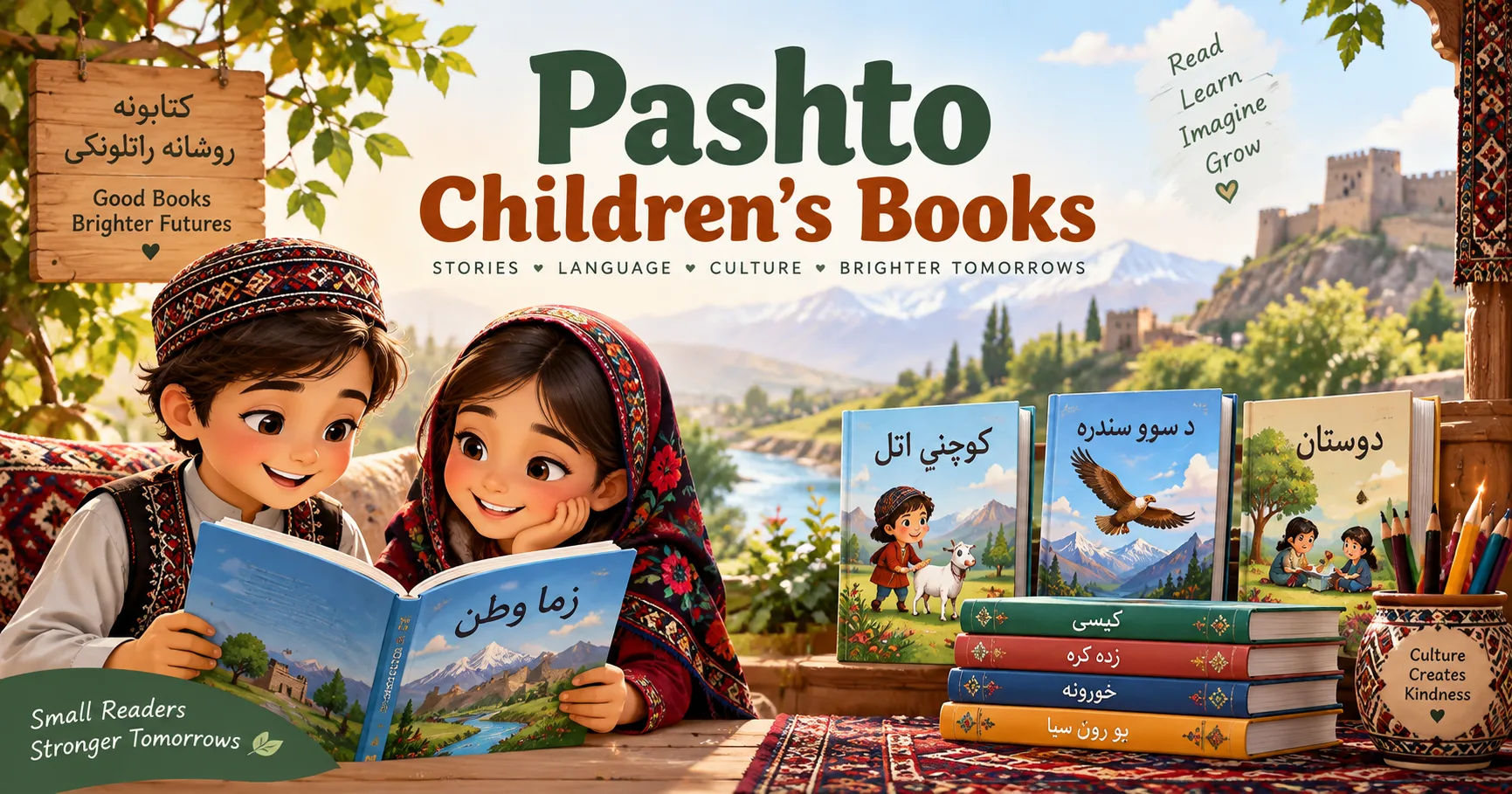
Parents do not need to be professional storytellers to make reading enjoyable. A calm voice, regular reading time, simple questions, and genuine interest can make a major difference. The goal is not simply to finish a story. It is to help children understand the words, enjoy the characters, think about the events, and connect the story with their own experiences.
This guide explains practical ways parents can read Pashto children's books with children, from choosing an appropriate book to discussing the story afterward.
Why Should Parents Read in Pashto?
Reading in a child's familiar language can make books easier to understand and more enjoyable. Children can focus on the meaning of the story instead of struggling with unfamiliar vocabulary in every sentence.
Pashto reading can also create a stronger connection between children and family traditions. Stories may introduce children to local customs, values, expressions, names, places, and forms of storytelling that are meaningful to their community.
Regular reading can also encourage children to become interested in books generally. When children associate reading with comfort and family time, they may become more willing to explore other types of literature as they grow.
Choose Books That Match the Child's Age
The first step is selecting an appropriate book. A story that is too difficult can make a young reader frustrated, while a very simple book may not hold the attention of an older child.
For Younger Children
For preschool and early elementary children, look for stories with:
-
Large and clear illustrations
-
Short sentences
-
Repetition
-
Familiar objects and situations
-
Simple characters
-
Easy vocabulary
Picture books can be especially useful because children can understand part of the story by looking at the images.
For Older Children
Older children can handle longer stories and more complex ideas. Parents can introduce books involving friendship, family relationships, adventure, history, nature, school life, and problem-solving.
At this stage, parents should allow children to choose some books themselves. Giving them choices can make reading feel like an enjoyable activity rather than a school assignment.
Create a Comfortable Reading Environment
The environment can influence how children feel about reading. Parents should choose a quiet and comfortable place where the child can pay attention without unnecessary distractions.
A bedroom, living room, study corner, or another peaceful area can work well.
There is no need to create a formal classroom atmosphere. Sitting together and reading naturally can be more effective than making the activity feel like a lesson.
Parents can also establish a regular reading routine. For example, a family might read for 15 to 20 minutes before bedtime. A consistent schedule helps children know when to expect reading time.
Read the Story Before Starting
If possible, parents should look through the book before reading it with the child.
This allows them to understand the main characters, important events, difficult words, and overall message.
Knowing the story also helps parents answer questions. If a child asks why a character behaved in a particular way, the parent can explain the situation more confidently.
Parents should not worry about understanding every difficult word immediately. It is perfectly acceptable to pause and look at the surrounding sentences or explain a word using a simple example.
Read Slowly and Clearly
When reading Pashto children's books, pronunciation and pacing matter. Children learn not only from the words themselves but also from the way adults say them.
Parents should read clearly without rushing.
Short pauses can help children understand what is happening. A pause before an important event can also create curiosity.
For dialogue, parents can slightly change their tone of voice for different characters. This does not require dramatic acting. Even small changes can make the story more engaging.
Let Children Look at the Pictures
Illustrations are not merely decoration. They can help children understand characters, locations, emotions, and events.
Before reading a page, parents can ask the child what they notice in the picture.
For example, they might ask:
“What do you think is happening here?”
“Who is this character?”
“How does the character look?”
“What do you think will happen next?”
These questions encourage children to observe and predict rather than simply listen.
Explain Difficult Words Naturally
Children may encounter Pashto words that they do not understand. Parents should explain unfamiliar vocabulary without interrupting the story too frequently.
If a difficult word appears, parents can first explain it using simple Pashto. If necessary, they can give an example from everyday life.
For instance, if a story introduces an unfamiliar animal, object, or traditional activity, the parent can describe it using something the child already knows.
Avoid Turning Every Page Into a Vocabulary Test
Reading should remain enjoyable.
If parents stop after every sentence to ask the meaning of individual words, children may begin to think that reading is difficult work.
It is better to explain important words while allowing less important vocabulary to be understood gradually through context.
Ask Questions During the Story
Questions can make reading interactive.
Parents can ask children what they think a character is feeling, why something happened, or what might happen next.
Good questions do not always have one correct answer.
For example, if a character makes a difficult decision, parents can ask, “What would you do in this situation?”
This encourages children to connect the story with their own thoughts and experiences.
Encourage Children to Retell the Story
After finishing a book, ask the child to explain the story in their own words.
They might describe the beginning, middle, and ending. Younger children can simply identify the main characters and important events.
Retelling helps children practice vocabulary, memory, sequencing, and communication skills.
Parents should avoid correcting every small mistake. The main purpose is to encourage the child to express ideas confidently.
If the child struggles, parents can provide gentle prompts such as:
“What happened after they went outside?”
“Who helped the main character?”
“How did the story end?”
Discuss the Characters
Characters provide an excellent starting point for meaningful conversations.
Parents can ask children whether they liked a particular character and why.
They can discuss positive and negative decisions without making the conversation feel like an examination.
For example, if a character helps someone, parents can ask what motivated that action. If another character makes a mistake, they can discuss what could have been done differently.
This helps children think about responsibility, kindness, honesty, cooperation, and other values presented in the story.
Connect Stories With Everyday Life
One of the best ways to make Pashto children's books meaningful is to connect stories with real experiences.
If a story discusses friendship, parents can talk about the child's friends.
If it involves animals, parents can discuss animals the child has seen.
If it includes a traditional celebration, parents can talk about how the family celebrates similar occasions.
These connections help children understand that books are not separate from real life. Stories can provide a way to talk about everyday experiences and important family values.
Make Pashto Reading Interactive
Reading does not have to mean that one person speaks while everyone else listens.
Parents can invite children to participate.
Take Turns Reading
Older children can read certain paragraphs or pages aloud.
Parents can read one section and let the child read another. This gradually builds confidence.
Children who are still developing their reading skills may need help with difficult words. Parents should provide support without making the child feel embarrassed.
Predict What Happens Next
Pause before an important event and ask the child to predict what will happen.
The prediction does not need to be correct. The purpose is to encourage imagination and attention.
After reading the next section, parents can compare the prediction with what actually happened.
Act Out the Story
Some stories are perfect for simple role-playing.
Children can pretend to be different characters and repeat important lines. This can make reading especially enjoyable for younger children.
Role-playing also helps children understand emotions and character motivations.
Do Not Force a Child to Finish Every Book
Children have different interests.
A child may enjoy animals but dislike historical stories. Another child may prefer adventure and mystery.
Parents should provide variety while also respecting the child's interests.
If a book clearly does not interest the child, it may be better to try another one rather than forcing them to finish it.
The goal is to build a lasting relationship with reading.
Build a Small Pashto Home Library
Families do not need hundreds of books. Even a small collection can encourage regular reading.
Parents can keep books in an easily accessible place where children can choose them independently.
A mixture of picture books, folk stories, short stories, educational books, poetry, and age-appropriate longer stories can provide variety.
As children grow, parents can gradually replace simpler books with more advanced material.
Use Technology Carefully
Digital books and reading platforms can also provide access to Pashto material.
Technology can be useful when physical books are difficult to find. However, parents should still focus on active reading rather than simply giving a child a screen.
If a digital book includes audio, parents and children can listen together and then discuss the story.
Screen-based reading should still involve conversation, questions, and participation.
Encourage Children to Ask Questions
Children should feel comfortable asking about unfamiliar words, characters, customs, or events.
Parents can respond patiently.
Sometimes children ask questions that seem unrelated to the story. These questions can still lead to useful conversations.
For example, a child may ask about a place mentioned in the book. The parent can briefly explain it and then return to the story.
Curiosity is an important part of learning.
Respect Different Reading Levels
Two children of the same age may have very different reading abilities.
One child may read Pashto fluently, while another may understand spoken Pashto better than written Pashto.
Parents should consider the child's individual level.
A child who struggles with reading should not be compared negatively with siblings or classmates. Instead, parents can provide easier books and gradually increase difficulty.
Praise effort, improvement, and curiosity.
Make Reading a Family Activity
When possible, more than one family member can participate.
Parents, grandparents, older siblings, and other relatives can take turns reading stories.
This can be particularly valuable when children hear Pashto from several generations of the family.
Different family members may also explain words or cultural references in different ways, giving children a broader understanding of language and tradition.
Common Mistakes Parents Should Avoid
Parents sometimes unintentionally make reading less enjoyable.
One common mistake is focusing too heavily on pronunciation mistakes. Corrections are useful, but constant interruption can reduce confidence.
Another mistake is turning every reading session into a test.
Children do not need to answer a question after every paragraph.
Parents should also avoid choosing books only because adults consider them educational. A book can be valuable because it is funny, exciting, beautiful, comforting, or imaginative.
Enjoyment is itself an important part of becoming a reader.
How Often Should Parents Read?
There is no single schedule that works for every family.
A short daily session can be very effective. Even 10 to 20 minutes of focused reading can create a useful routine.
Families with less time can read several times a week.
Consistency matters more than making each session very long. A child who regularly enjoys short reading sessions may develop stronger reading habits than a child who is occasionally required to sit through a very long session.
How Parents Can Encourage Independent Reading
As children become more confident, parents should gradually allow them to read independently.
Parents can continue reading aloud while also giving children time to explore books on their own.
Ask children what they are reading and what they like about it, but avoid making every independent reading session into a report.
A child should eventually be able to pick up a book simply because they want to discover what is inside.
Conclusion
Reading Pashto children's books with children is about much more than teaching vocabulary or improving reading ability. It can become a shared family experience that supports communication, imagination, confidence, and cultural connection.
Parents can make the experience successful by choosing age-appropriate books, creating a comfortable reading environment, reading clearly, discussing unfamiliar words, asking thoughtful questions, and allowing children to participate.
The most important thing is to keep reading enjoyable. Children should have opportunities to laugh, imagine, ask questions, predict events, retell stories, and express their own opinions.
As children grow, parents can gradually introduce longer and more challenging stories while continuing to respect their individual interests and reading levels.
With patience and consistency, a simple reading routine can become a valuable part of family life. Whether a child is just beginning to recognize Pashto words or already enjoys longer stories, regular reading can help build confidence and create a lasting appreciation for books and language.
About the Author