When planning an epoxy flooring project, many property owners focus on the size of the space and the type of coating they want. However, one of the most important factors influencing the final price is the condition of the existing floor. 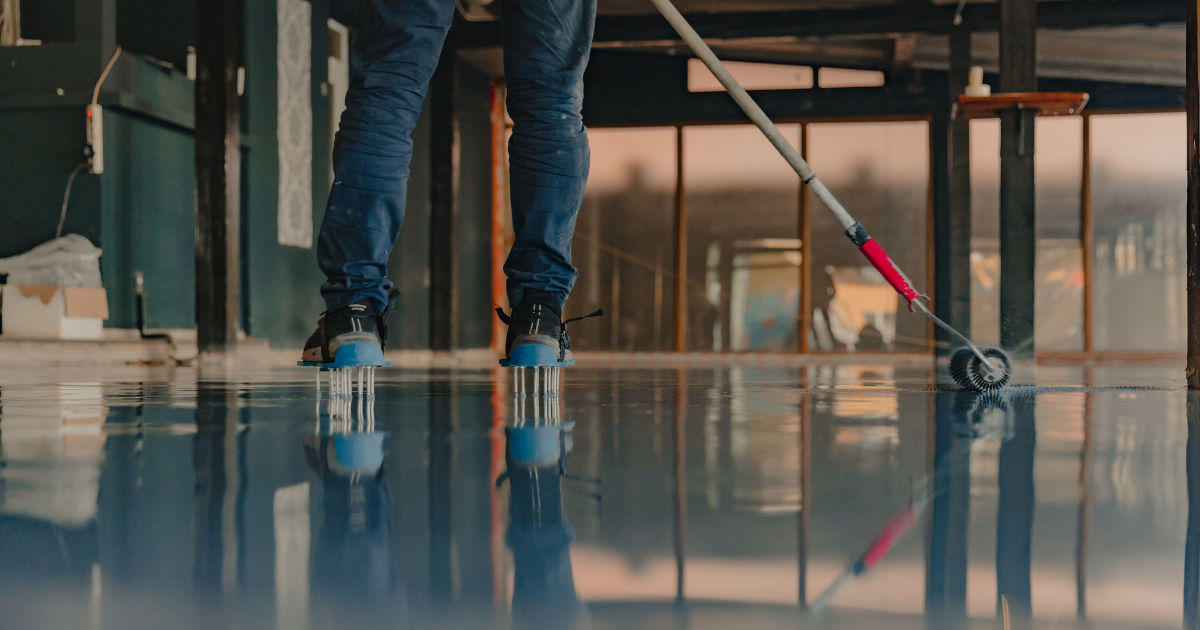 Before any contractor can provide an accurate epoxy flooring cost estimate, they must carefully evaluate the surface that will receive the epoxy coating.
A professional epoxy flooring cost estimate is never based solely on square footage. The current condition of the concrete plays a major role in determining labor requirements, preparation methods, materials, equipment, and project timelines. Floors with cracks, moisture issues, stains, uneven surfaces, or structural damage require additional work before epoxy can be applied successfully.
Understanding why floor condition matters can help homeowners, business owners, and facility managers better plan their projects and avoid unexpected expenses. This guide explains how floor conditions affect pricing, what contractors inspect during evaluations, and why proper preparation is essential for a durable epoxy floor.
Understanding Epoxy Flooring
Epoxy flooring is a durable surface coating created by combining resin and hardener. When these materials react together, they form a strong, protective layer that bonds to concrete surfaces.
Epoxy flooring is commonly used in:
- Residential garages
- Warehouses
- Manufacturing facilities
- Retail stores
- Hospitals
- Commercial kitchens
- Showrooms
Because epoxy creates a seamless and highly durable surface, it is popular for both functional and decorative applications. However, the success of the installation depends heavily on the condition of the substrate underneath.
This is why every professional epoxy flooring cost estimate begins with a detailed floor inspection.
Why Floor Condition Matters Before Epoxy Installation
Epoxy is not a magic solution that hides major floor defects. Instead, it highlights imperfections if the surface is not prepared properly.
A damaged floor may cause:
- Poor adhesion
- Premature peeling
- Bubbling
- Cracking
- Delamination
- Uneven appearance
- Reduced lifespan
To avoid these problems, contractors must repair and prepare the surface before applying epoxy. The amount of preparation required directly influences the final epoxy flooring cost estimate.
The worse the floor condition, the more labor and materials are needed.
The Role of Surface Preparation
Surface preparation is often the most labor-intensive part of an epoxy flooring project.
Many people assume epoxy installation is simply a matter of rolling on a coating. In reality, preparation may account for a large portion of the total project cost.
During preparation, contractors may need to:
- Grind concrete
- Repair cracks
- Remove coatings
- Eliminate contaminants
- Fill pits
- Level uneven areas
- Test moisture levels
Each additional preparation step increases the overall epoxy flooring cost estimate.
Cracks and Their Impact on Cost
Concrete cracks are among the most common floor issues.
Not all cracks are the same. Some are minor surface cracks, while others indicate structural movement.
Hairline Cracks
Hairline cracks are usually cosmetic and relatively inexpensive to repair.
Contractors may:
- Clean the crack
- Fill it with epoxy filler
- Grind the area smooth
Although these repairs add cost, the increase in the epoxy flooring cost estimate is usually modest.
Large Cracks
Wide or deep cracks require more extensive repair procedures.
The contractor may need to:
- Open the crack
- Remove loose material
- Apply repair compounds
- Reinforce the area
These repairs require additional labor and materials, leading to a higher epoxy flooring cost estimate.
Structural Cracks
Structural cracks are the most serious.
They may indicate:
- Foundation settlement
- Soil movement
- Excessive load stress
Addressing structural issues often requires specialized repairs before epoxy installation can proceed. This significantly impacts the overall epoxy flooring cost estimate.
Uneven Floors Increase Project Costs
A perfectly flat floor is ideal for epoxy applications.
Unfortunately, many concrete surfaces develop:
- High spots
- Low spots
- Waves
- Slopes
- Surface irregularities
Epoxy follows the contour of the concrete underneath. If the floor is uneven, the final finish may appear flawed.
Grinding High Spots
Contractors often use industrial grinders to remove raised areas.
This process requires:
- Specialized equipment
- Additional labor
- Dust-control systems
As a result, the epoxy flooring cost estimate increases.
Filling Low Areas
Depressions and low spots must often be filled before coating.
Self-leveling compounds may be necessary to create a smooth surface.
These materials add both labor and product costs, affecting the final epoxy flooring cost estimate.
Surface Contamination Problems
Contaminants are another major factor affecting epoxy installation.
Common contaminants include:
- Oil
- Grease
- Chemicals
- Paint
- Adhesives
- Dirt
- Tire residue
Epoxy requires a clean surface for proper adhesion.
Oil Stains
Oil contamination is especially common in garages and industrial facilities.
Oil penetrates concrete pores and can interfere with bonding.
Removing oil may require:
- Degreasers
- Chemical treatments
- Mechanical grinding
These extra procedures increase the epoxy flooring cost estimate.
Paint and Coating Removal
Existing coatings must often be removed before applying epoxy.
This process may involve:
- Diamond grinding
- Shot blasting
- Chemical stripping
The more coating removal required, the higher the epoxy flooring cost estimate.
Moisture Issues and Their Effect on Estimates
Moisture is one of the biggest threats to epoxy flooring.
Concrete naturally absorbs moisture from the ground and surrounding environment.
Why Moisture Is Dangerous
Excess moisture can cause:
- Blistering
- Peeling
- Delamination
- Coating failure
Contractors often conduct moisture testing before providing a final epoxy flooring cost estimate.
Moisture Mitigation Systems
If moisture levels are high, special moisture barriers may be required.
These systems:
- Add material costs
- Increase labor requirements
- Extend project timelines
Consequently, moisture issues can significantly raise the epoxy flooring cost estimate.
Pitting and Surface Damage
Older concrete floors often contain pits, holes, and surface defects.
These imperfections can affect both performance and appearance.
Repairing Surface Pits
Contractors typically fill pits using repair compounds.
The process includes:
- Cleaning the damaged area
- Applying filler
- Grinding smooth
- Inspecting repairs
Large numbers of pits increase labor hours and influence the epoxy flooring cost estimate.
Spalling Damage
Spalling occurs when concrete flakes or chips away.
Common causes include:
- Freeze-thaw cycles
- Moisture intrusion
- Poor concrete quality
Repairing spalled concrete requires additional restoration work, which affects the epoxy flooring cost estimate.
Previous Coatings and Their Impact
Many floors already have some form of coating.
Examples include:
- Paint
- Sealers
- Urethane coatings
- Old epoxy
Existing coatings must often be removed before a new epoxy system can be installed.
Adhesion Concerns
New epoxy bonds best to properly prepared concrete.
Old coatings may:
- Peel
- Flake
- Separate
Installing epoxy over unstable coatings creates risks.
Contractors therefore spend extra time removing these materials, which increases the epoxy flooring cost estimate.
Concrete Age and Condition
The age of a floor can influence installation requirements.
New Concrete
Fresh concrete usually requires curing before epoxy installation.
Improper curing can create moisture problems that affect the epoxy flooring cost estimate.
Older Concrete
Older floors may have:
- Surface wear
- Cracking
- Contamination
- Structural damage
More preparation is often necessary, increasing the overall epoxy flooring cost estimate.
Importance of Concrete Hardness
Not all concrete is equally hard.
Contractors evaluate concrete hardness because it affects grinding efficiency.
Soft Concrete
Soft concrete may:
- Wear down quickly
- Produce excess dust
- Require special preparation
These factors can influence the final epoxy flooring cost estimate.
Hard Concrete
Very hard concrete may require:
- Additional grinding time
- Specialized tooling
- Increased equipment wear
This can also affect the epoxy flooring cost estimate.
Floor Size Versus Floor Condition
Many customers assume square footage is the primary pricing factor.
While size matters, condition often matters more.
Consider two 1,000-square-foot garages:
Garage A
- Clean concrete
- No cracks
- No contamination
- Minimal preparation
Garage B
- Oil stains
- Large cracks
- Moisture issues
- Uneven surfaces
Even though both garages are the same size, Garage B will typically receive a much higher epoxy flooring cost estimate because preparation requirements are significantly greater.
How Professional Inspections Affect Accuracy
A reliable estimate requires a thorough inspection.
Professional contractors examine:
- Cracks
- Moisture levels
- Surface contamination
- Existing coatings
- Structural damage
- Floor flatness
Without inspection, any epoxy flooring cost estimate may be inaccurate.
Why Cheap Estimates Can Be Misleading
Some companies provide estimates without evaluating the floor.
This can create problems later.
Hidden Costs
A low initial estimate may not account for:
- Crack repairs
- Moisture barriers
- Grinding
- Surface leveling
After work begins, additional charges may appear.
Poor Preparation
Some contractors reduce costs by skipping preparation.
Unfortunately, poor preparation often leads to:
- Coating failure
- Shorter lifespan
- Expensive repairs
A realistic epoxy flooring cost estimate includes necessary preparation from the beginning.
Residential Garage Floors
Garage floors are among the most common epoxy projects.
However, garages frequently contain:
- Oil stains
- Tire marks
- Cracks
- Surface wear
Each issue affects preparation requirements and influences the epoxy flooring cost estimate.
Commercial Floors
Commercial facilities often experience heavy traffic.
Common challenges include:
- Forklift damage
- Chemical exposure
- Surface abrasion
- Previous coatings
These conditions require careful evaluation before developing an accurate epoxy flooring cost estimate.
Industrial Floors
Industrial environments place extreme stress on concrete surfaces.
Contractors may encounter:
- Deep cracks
- Heavy contamination
- Equipment damage
- Structural wear
Industrial floor restoration can significantly affect the final epoxy flooring cost estimate.
Decorative Epoxy Systems and Floor Condition
Decorative systems require even greater attention to surface quality.
Examples include:
- Metallic epoxy
- Flake flooring
- Quartz systems
Decorative finishes highlight imperfections more easily.
As a result, contractors often perform additional repairs and preparation, impacting the epoxy flooring cost estimate.
How Floor Condition Affects Labor Costs
Labor is one of the largest components of epoxy installation pricing.
Poor floor conditions increase labor through:
- Extended grinding
- Crack repair
- Surface cleaning
- Moisture mitigation
- Leveling work
More labor hours naturally lead to a higher epoxy flooring cost estimate.
How Floor Condition Affects Material Costs
Damaged floors require additional materials such as:
- Crack fillers
- Repair mortars
- Self-leveling compounds
- Moisture barriers
- Primers
These products contribute to a higher epoxy flooring cost estimate.
Equipment Requirements for Damaged Floors
Specialized equipment may be needed for difficult projects.
Examples include:
- Diamond grinders
- Shot blasters
- Dust collection systems
- Moisture testing tools
Equipment usage and wear influence the final epoxy flooring cost estimate.
Long-Term Value of Proper Preparation
Although preparation increases project costs, it provides substantial long-term benefits.
Properly prepared floors offer:
- Better adhesion
- Longer lifespan
- Improved appearance
- Lower maintenance costs
- Reduced repair expenses
A higher initial epoxy flooring cost estimate often results in greater value over time.
Tips for Homeowners Seeking Accurate Estimates
To obtain a realistic estimate:
Schedule an On-Site Inspection
Allow contractors to inspect the floor in person.
Discuss Existing Problems
Mention cracks, stains, and moisture concerns.
Request Detailed Pricing
Ask for itemized preparation costs.
Compare Scope of Work
Do not compare estimates based only on price.
Review preparation methods carefully.
Prioritize Quality
Choose contractors who emphasize proper preparation and long-term performance.
A detailed epoxy flooring cost estimate is usually more reliable than a simple low-price quote.
Common Mistakes That Affect Epoxy Project Budgets
Property owners sometimes underestimate the impact of floor condition.
Common mistakes include:
- Ignoring cracks
- Overlooking moisture issues
- Skipping inspections
- Choosing the cheapest bid
- Assuming all floors need equal preparation
Avoiding these mistakes can help ensure a more accurate epoxy flooring cost estimate and a more successful installation.
Conclusion
Floor condition is one of the most important factors affecting epoxy flooring project costs. While many people focus on square footage, the true complexity of an installation often depends on the state of the existing concrete. Cracks, moisture problems, contamination, uneven surfaces, spalling, and previous coatings all require varying levels of preparation before epoxy can be applied successfully.
Every professional epoxy flooring cost estimate should include a careful evaluation of the floor’s condition. The more repairs and preparation required, the more labor, materials, equipment, and time will be needed. Although this can increase initial costs, proper preparation ensures stronger adhesion, better appearance, longer lifespan, and fewer future repairs.
When reviewing an epoxy flooring cost estimate, property owners should look beyond the price and understand the work included. A detailed estimate that addresses floor condition is usually the best indicator of a durable and successful epoxy flooring installation. Investing in proper surface preparation today can save substantial money and frustration in the years ahead.
About the Author