Buying jewelry is not only about choosing a beautiful design. Quality, comfort, durability, and craftsmanship all matter, especially when you are purchasing handcrafted earrings. Because these pieces are often made individually or in small batches, their quality can vary depending on the materials, techniques, and skill of the maker.
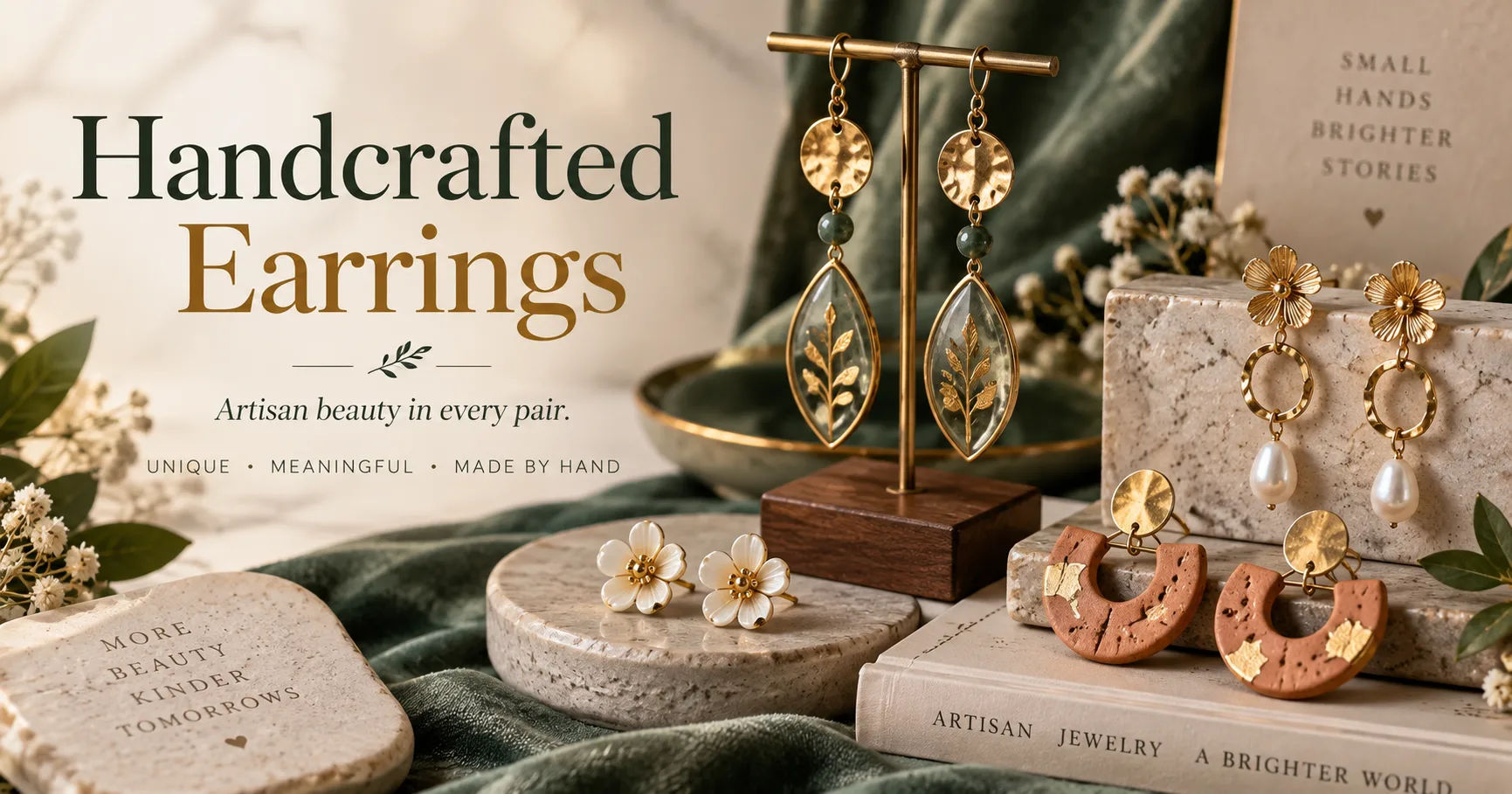
A well-made pair should look attractive while also being comfortable and durable enough for regular use. Learning how to inspect earrings before buying them can help you recognize good workmanship and avoid pieces that may break, discolor, or cause discomfort.
Why Quality Matters in Handcrafted Earrings
Handmade jewelry has a special appeal because it often includes details that are difficult to achieve through mass production. However, handmade does not automatically mean high quality.
Quality depends on several factors, including the materials used, construction methods, finishing, and attention to detail. A beautiful pair can still have weak connections or poorly finished edges.
When checking a pair, look beyond the overall appearance. Examine how the different components are attached and whether the earrings feel secure in your hands.
Good craftsmanship should be visible in the small details.
Check the Materials
The first step is to understand what the earrings are made from. Materials can affect appearance, weight, durability, and skin comfort.
Common materials include sterling silver, gold-filled components, stainless steel, brass, copper, polymer clay, glass, ceramic, wood, beads, gemstones, and various decorative materials.
Ask the seller for clear information about the metal and other components. If the description simply says “metal” without providing further details, you may want to ask questions before purchasing.
Examine Metal Components
Metal parts should be reasonably smooth and free from sharp edges. Look closely at hooks, posts, hoops, clasps, and connecting rings.
If the earrings contain sterling silver or another precious metal, check whether the seller provides information about its purity or composition. Reputable sellers should be able to explain the materials used.
For plated jewelry, ask what the base metal is and what type of plating has been applied.
Consider Skin Sensitivity
The material touching your ears deserves particular attention. Some people are sensitive to certain metals, especially nickel.
If you have sensitive ears, look for earrings made with materials you already know you tolerate. Options such as surgical-grade stainless steel, titanium, or certain precious metals may be suitable for some people, but individual sensitivity varies.
Do not assume that every handmade piece is automatically hypoallergenic.
Inspect the Construction
Construction is one of the clearest signs of quality. Hold the earrings carefully and inspect how each component connects to the next.
The parts should fit together securely. Connecting rings should be properly closed rather than left with a noticeable gap.
If an earring consists of multiple beads, charms, or decorative elements, check whether each part is firmly attached.
Check the Earring Hooks and Posts
Earring hooks should be smooth and properly shaped. They should not have rough points that could scratch your skin.
Posts should be straight and securely attached to the decorative section. If the post appears loose, crooked, or poorly connected, the earring may not last long.
The backings should also fit properly. A backing that is too loose can make an earring easier to lose.
Examine Glue and Adhesives
Some handmade earrings use adhesive to attach decorative elements. Glue itself is not necessarily a sign of poor craftsmanship.
The important factor is how neatly and appropriately it has been used.
Excess glue that is clearly visible around the edges may indicate careless finishing. The adhesive should generally hold the components securely without creating an unattractive or messy appearance.
Look at the Finishing
Finishing can make a major difference in the overall quality of handmade jewelry.
Run your eyes carefully over the surface. Look for uneven edges, scratches, unfinished areas, excess material, or rough sections.
A handcrafted item can have small variations because it was made by hand. These variations are not necessarily defects. In fact, they can be part of its character.
However, there is an important difference between intentional handmade variation and poor workmanship.
A slightly different pattern may be charming. A sharp edge that can hurt your ear is a quality problem.
Check Symmetry
If the earrings are designed as a matching pair, compare them side by side.
They do not necessarily need to be perfectly identical. Handmade pieces may naturally have slight differences.
However, the basic proportions, attachments, and overall shape should usually be consistent.
For example, if one earring is significantly heavier or larger than the other without this being part of the design, it may be worth asking the seller about it.
Evaluate the Weight
Weight is particularly important for earrings because they hang from a small area of the ear.
A large decorative earring can look attractive but become uncomfortable if it is too heavy.
Before buying, check the listed weight if it is available. If the seller does not provide it, you can ask.
For everyday wear, lightweight designs are often easier to tolerate. Larger statement pieces may be better suited to shorter periods of use.
Consider the Design
The shape of the earring can also influence comfort.
Long, dangling earrings may move more than small studs. Large hoops can catch on clothing or hair. Heavy decorations placed far from the ear can create additional pulling.
Think about when and where you intend to wear the pair.
A design that works beautifully for a special event may not be the most practical choice for wearing throughout a school or workday.
Inspect Gemstones and Beads
If the earrings include gemstones, crystals, beads, or other decorative pieces, examine each component carefully.
Look for cracks, chips, loose stones, or damaged surfaces.
Gemstones should generally be securely positioned rather than moving excessively inside their settings.
Beads should also be checked for visible damage.
Check Stone Settings
When a stone is held in a metal setting, gently inspect the area around it. The setting should appear secure.
If the stone moves noticeably when handled carefully, ask the seller whether it is intentionally designed to move or whether it needs adjustment.
Do not pull aggressively on stones or decorative components during an inspection because this could damage the jewelry.
Check the Color and Surface
The surface should match the description and photographs provided by the seller.
For painted, coated, or plated earrings, inspect the finish for uneven patches, peeling, bubbling, or discoloration.
A handmade finish may have minor artistic variations, but widespread flaking or poor coverage can indicate a durability issue.
If the earrings are made from naturally colored materials, slight variations can be completely normal.
Ask About Durability
A good seller should be able to answer basic questions about how the earrings are made and maintained.
Ask what materials were used, how the pieces were assembled, and how they should be stored or cleaned.
You can also ask whether the earrings are intended for everyday use or occasional wear.
This information helps you understand whether the product matches your expectations.
Ask About Water and Moisture
Some materials should not be exposed regularly to water, perfume, sweat, or other substances.
For example, certain plated metals can eventually change appearance when exposed repeatedly to moisture and chemicals.
If you want earrings for frequent use, ask how resistant the materials are to everyday exposure.
Examine the Seller's Product Information
Quality inspection does not have to happen entirely after the product arrives.
Before purchasing, carefully read the product description. Look for information about materials, dimensions, weight, care instructions, and construction.
Detailed descriptions can make it easier to understand exactly what you are buying.
Clear photographs are also useful. Look at close-up images rather than relying only on photographs taken from a distance.
Look for Customer Reviews
Customer reviews can provide practical information about durability and comfort.
Pay attention to comments about broken hooks, loose stones, discoloration, uncomfortable posts, or differences between the product and its description.
At the same time, remember that individual experiences can differ.
A review is most useful when it provides specific details rather than simply saying that the product is “good” or “bad.”
Check the Earring Backs
The backing may seem like a small detail, but it plays an important role in comfort and security.
For studs, check whether the backing fits properly onto the post.
For hooks, examine whether the closure or stopper works as intended.
A poorly fitting backing can increase the chance of losing an earring.
If the design does not include a conventional backing, understand how it is intended to stay securely in the ear.
Pay Attention to Handmade Details
One of the benefits of handcrafted jewelry is its individuality.
Small differences in texture, shape, color, and pattern can be normal. They may show that the piece was produced by hand rather than by an entirely automated process.
The goal is not to demand machine-like perfection.
Instead, look for evidence of careful workmanship.
A high-quality handmade piece should show intentional design and careful finishing even when it contains subtle variations.
Compare the Pair Carefully
Place both earrings next to each other under good lighting.
Compare their size, shape, color, weight, and decorative elements.
If they are intended to be identical, major differences could indicate a manufacturing issue.
For intentionally asymmetrical designs, compare the pair according to the seller's description instead.
The key is understanding what the design is supposed to look like.
Consider Comfort Before Buying
Quality is not only about durability. Comfort is also part of a good product.
Think about the size and shape of the earrings and how they will sit on your ears.
If you normally wear small studs, moving immediately to very large or heavy designs may require some adjustment.
People with sensitive ears should pay particular attention to the material of the posts and hooks.
Understand the Price
Price can provide some information, but it should not be your only method of judging quality.
A handmade piece may cost more because of the maker's time, specialized techniques, higher-quality materials, or detailed finishing.
On the other hand, an expensive price does not automatically guarantee excellent construction.
Instead of asking whether a pair is expensive or inexpensive, consider what you are receiving for the price.
Look at the materials, craftsmanship, design complexity, durability, and seller information together.
Warning Signs to Watch For
Certain issues deserve extra attention when buying earrings.
Be cautious if the product description does not identify basic materials, especially when the earrings contain metal components that will touch your skin.
Other concerns include visibly loose stones, sharp edges, badly aligned parts, excessive adhesive, poorly closed connecting rings, damaged surfaces, and unclear care instructions.
Another warning sign can be photographs that avoid close-up views of important details.
If you cannot determine what the earring posts, hooks, or backs are made from, ask the seller before purchasing.
How to Check Quality After Delivery
When your order arrives, inspect it before wearing the earrings.
Check the pair under good lighting and compare it with the product photographs and description.
Look at the posts, hooks, backs, decorative pieces, and connecting points.
Make sure there are no sharp edges or damaged components.
If the item arrives broken, significantly different from the listing, or with a serious construction problem, contact the seller promptly and follow the store's return or replacement policy.
How to Care for Quality Earrings
Even well-made jewelry can become damaged without proper care.
Store earrings in a clean, dry location. Keeping individual pieces separated can help prevent scratches and tangling.
Avoid spraying perfume, hairspray, or other cosmetic products directly onto jewelry.
Remove earrings when appropriate for the material, especially before swimming or activities involving prolonged exposure to water.
Follow the manufacturer's cleaning instructions because different materials require different care.
A Simple Quality Checklist
Before purchasing handcrafted earrings, ask yourself a few practical questions.
Are the materials clearly identified?
Are the hooks or posts smooth and secure?
Are the decorative elements firmly attached?
Is the finish neat?
Are the earrings comfortable enough for your intended use?
Is the weight clearly provided or easy to determine?
Does the seller provide care instructions?
Do customer reviews mention any recurring construction problems?
Does the product description accurately explain what you will receive?
Answering these questions can make the buying process much easier.
Conclusion
Checking jewelry quality requires more than looking at whether a pair is attractive. When examining handcrafted earrings, pay attention to materials, construction, finishing, weight, comfort, attachments, decorative components, and care requirements.
Small handmade variations are often normal and can add character to a piece. However, rough edges, loose components, excessive glue, damaged stones, poorly attached posts, or unreliable closures should not be ignored.
Product descriptions and customer reviews can also help you make a more informed purchase. If important information is missing, asking the seller directly is often the simplest solution.
Ultimately, a good pair should combine an appealing design with thoughtful construction and suitable materials. By developing the habit of checking these details, you can better understand the quality of handmade jewelry and choose pieces that fit your style, comfort needs, and intended use.
About the Author